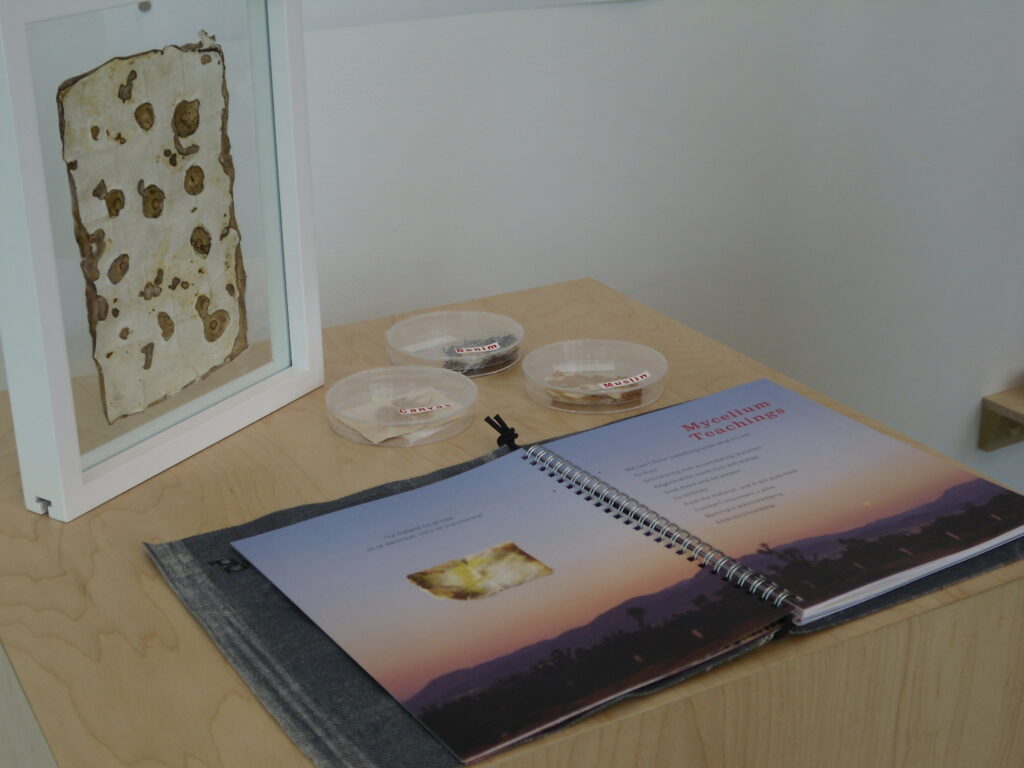
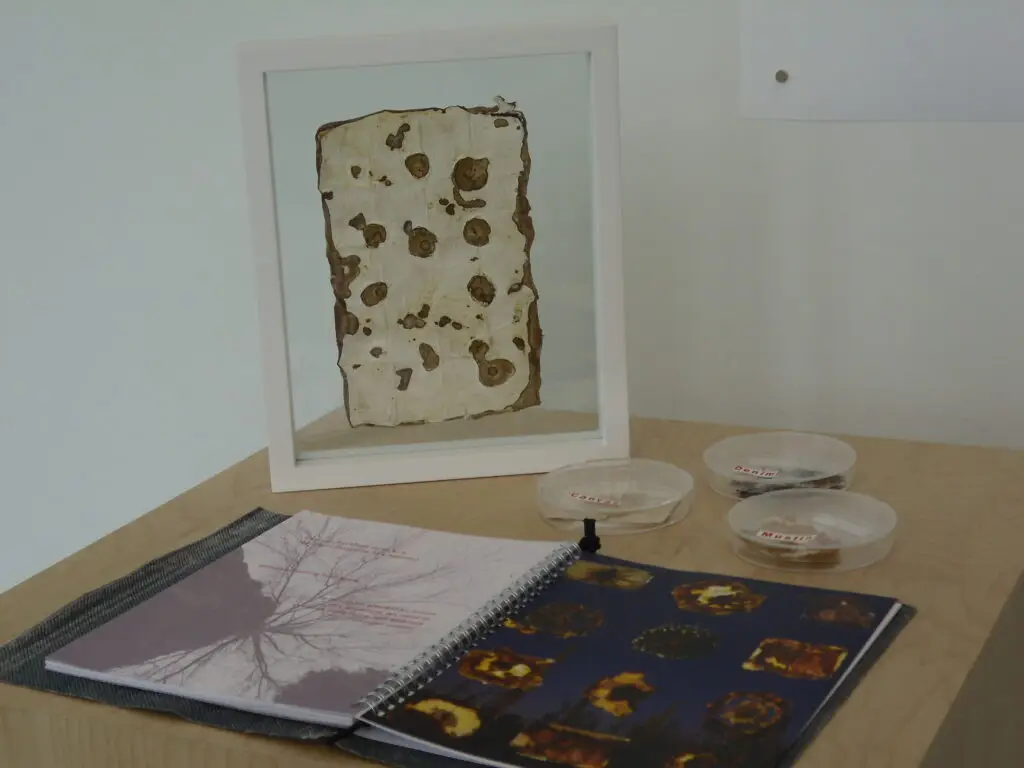
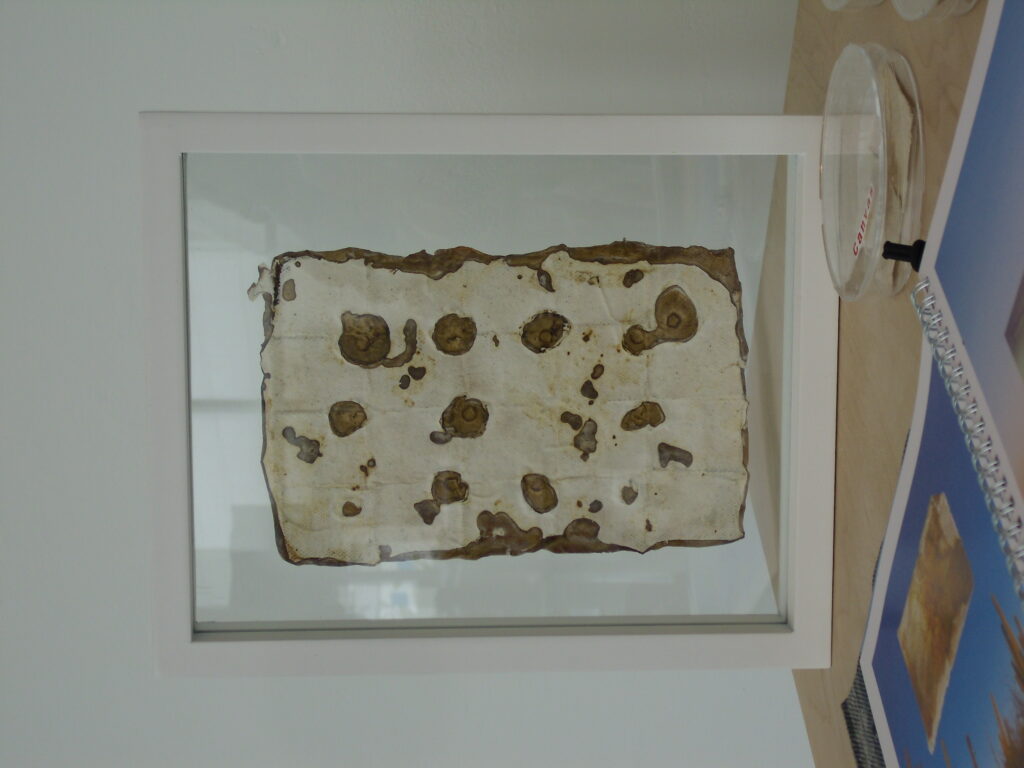
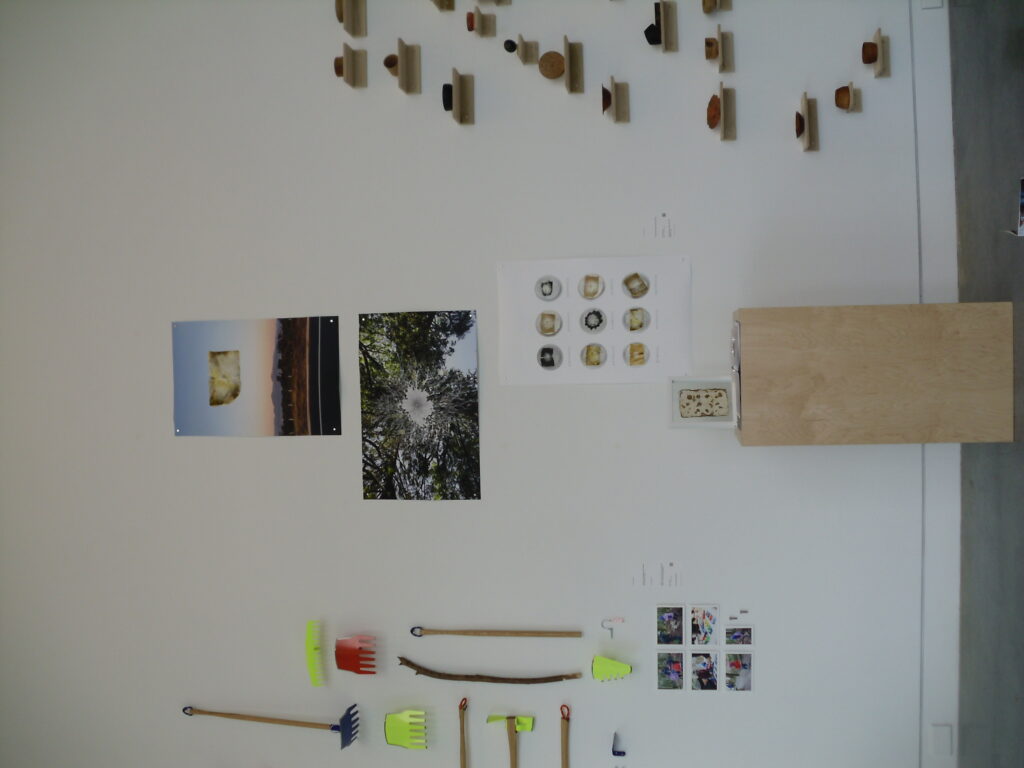
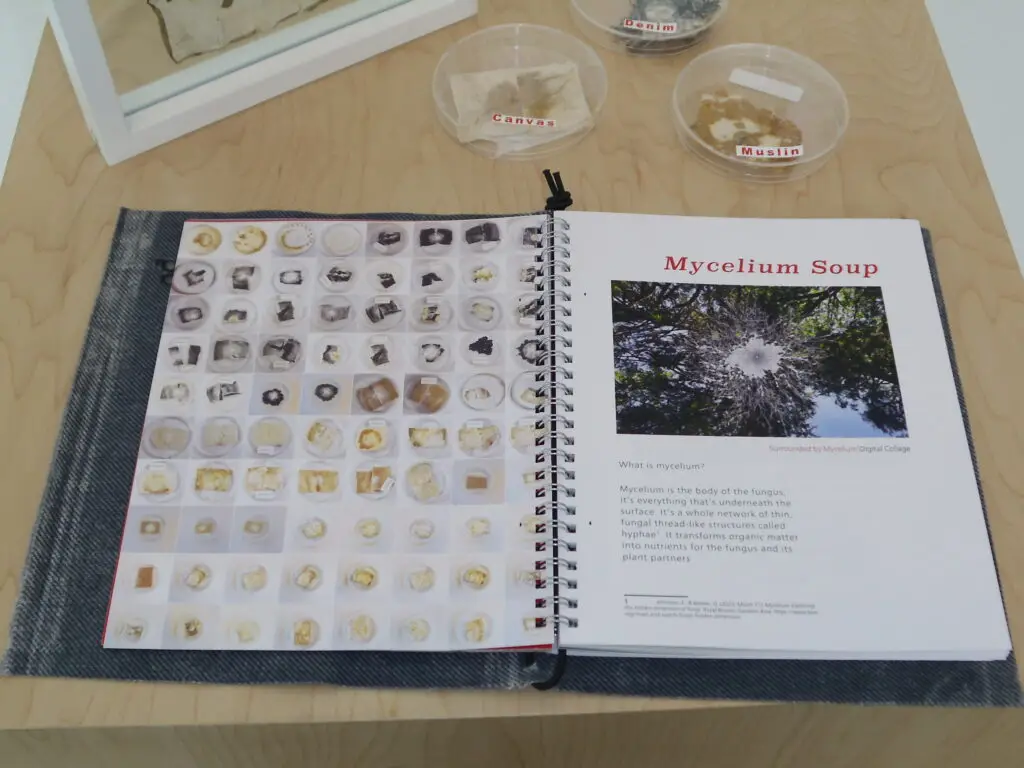
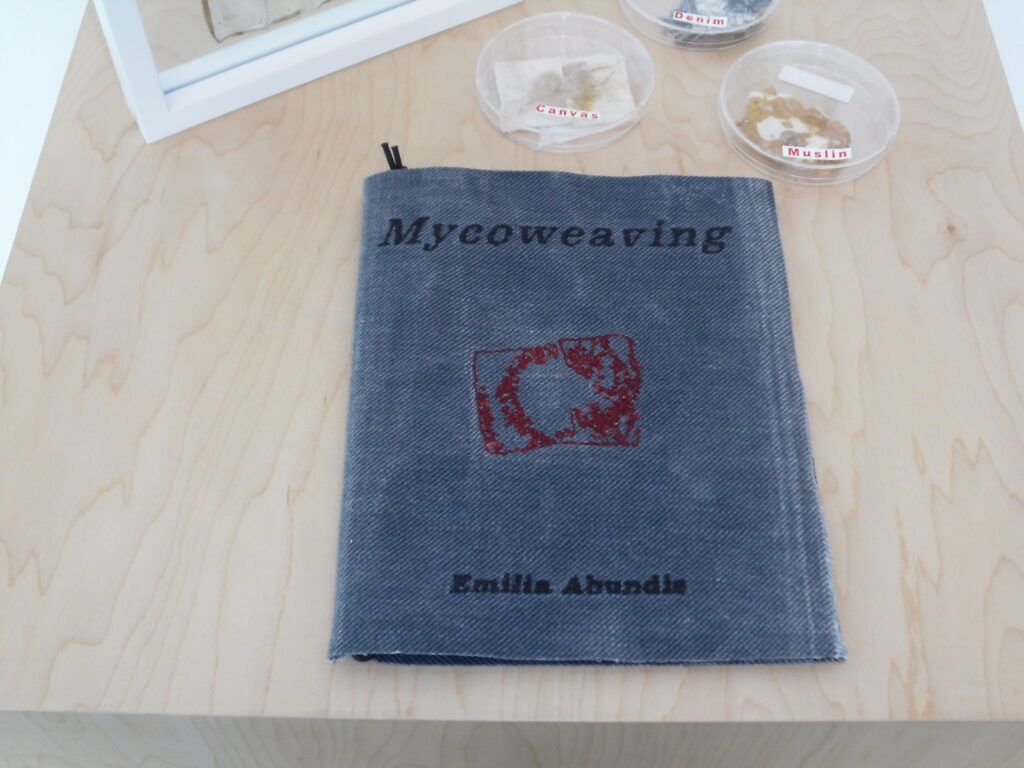
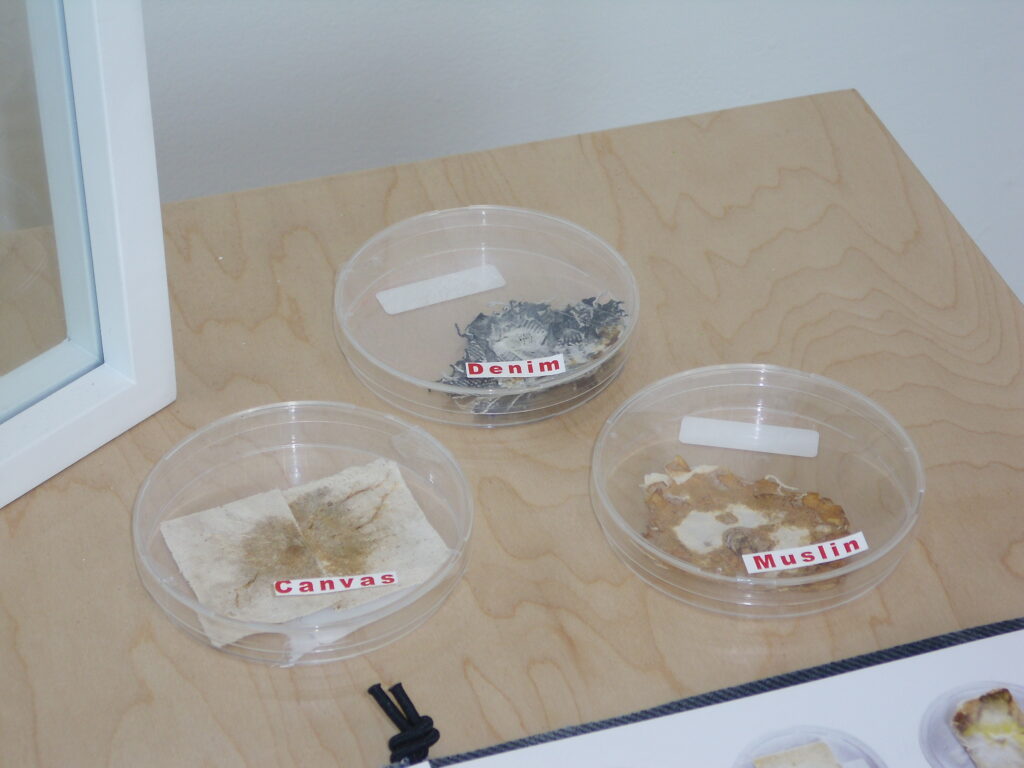
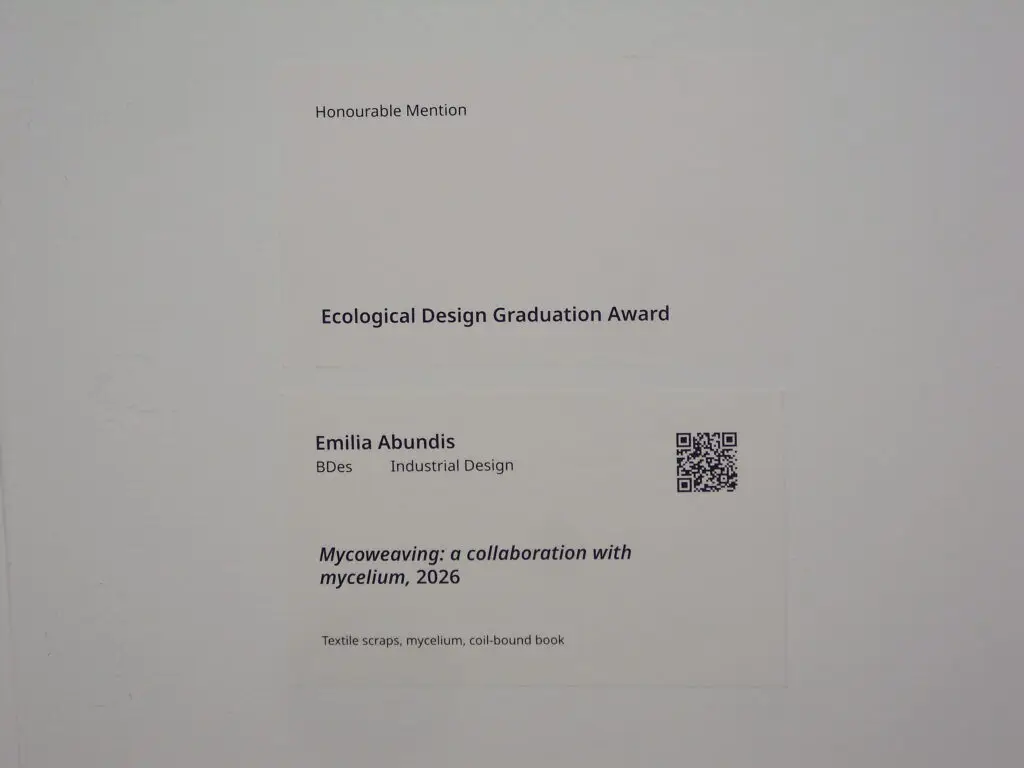
Located at the Main East Hall of the Emily Carr University’s ‘The Show’ graduation expo, is the work of Mexican designer Emilia Abundis. Mycoweaving: A collaboration with mycelium intertwines the complexity of fungi, specifically mycelium, with the diverse realm of fashion, showing us how they interact together and transform each other into regenerative biomaterials.
You may know fungi as the cute plant looking creatures that pop up after it rains, but underneath lies the mycelium, the actual body of it all, the one that is able to connect entire forests underground, same quality that reconnects parts of your brain that lost communication, or different layers of textiles, and serves as key team member for this project that started testing in November of last year.
ECOFEMINISM
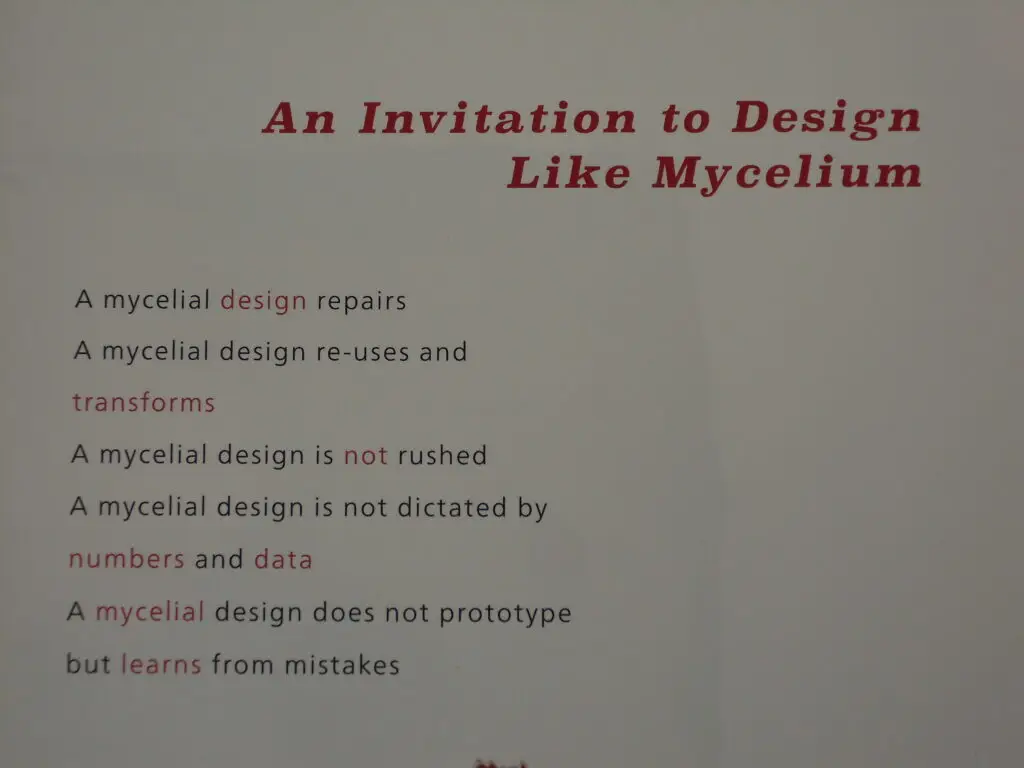
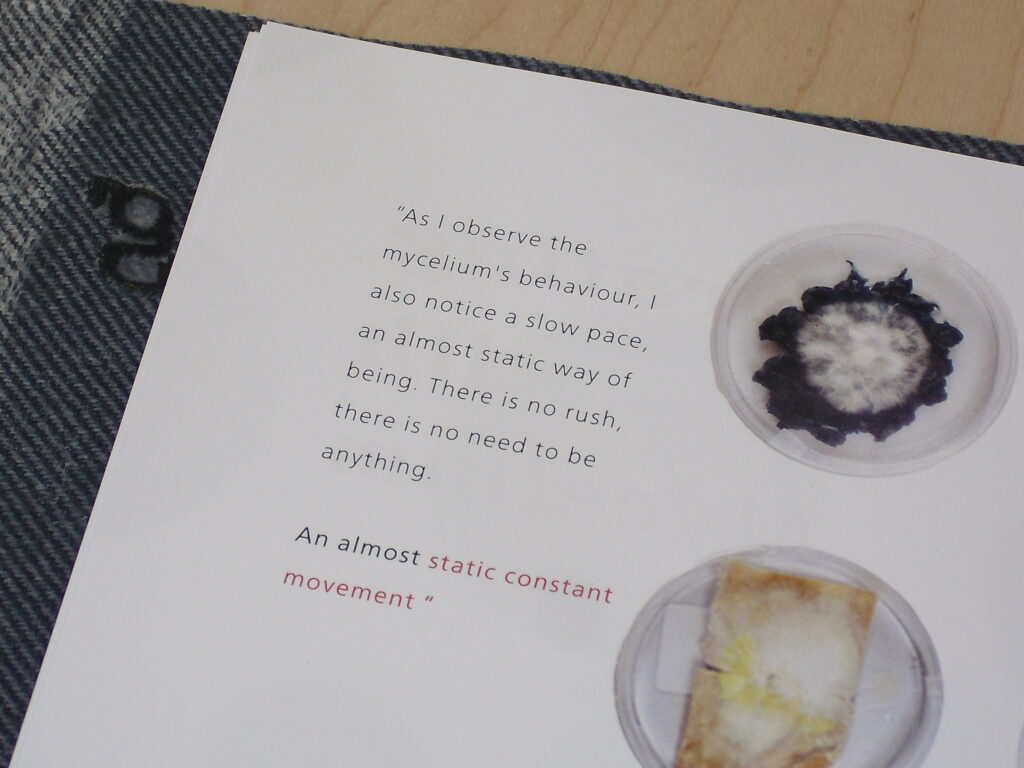
In her words, “this project seeks to redesign the established colonial, patriarchal, and capitalist design approach into one that fosters community, regeneration, and a deeper connection with nature. Mycelium teaches us that we can’t force something to be what it’s not, to slow down, be patient and that regeneration needs fuel and energy”.
The end result goes beyond connecting textiles together through growing, living fungi, but to show that nature and design can work together as one, that life can be many things and look many different ways, and dares us to look at design from a different perspective.
This project came together with the support from Maia Farms, and received the Honorable Mention for Ecological Design Graduation Award.
Check out the full research report by Emilia Abundis in collaboration with Maia Farms and the Emily Carr University of Design: https://acrobat.adobe.com/id/urn:aaid:sc:VA6C2:34d6ffd1-425c-4b5a-b101-d856e02340b1